
Mon–Thu 8:00–12:00 & 2:30–6:00 · Closed Friday6021 Fairmont Pkwy #250, Pasadena, TX · (281) 991-3002
StemWave · Acoustic Wave Therapy · Pasadena, TX

Rest was supposed to fix it.

Plantar fasciitis that's ruined a year of mornings. Tennis elbow that never got a racket involved. An Achilles that aches on the first mile, every time. Tendon and joint pain that ignores rest isn't being stubborn for no reason — the tissue has stopped trying to heal. StemWave therapy exists for exactly that stage. This page explains how tendons get stuck, what acoustic wave therapy does about it, and who it's for.

★★★★★ 4.9 on Google·29+ years in Pasadena·Spine & sports medicine since 1996
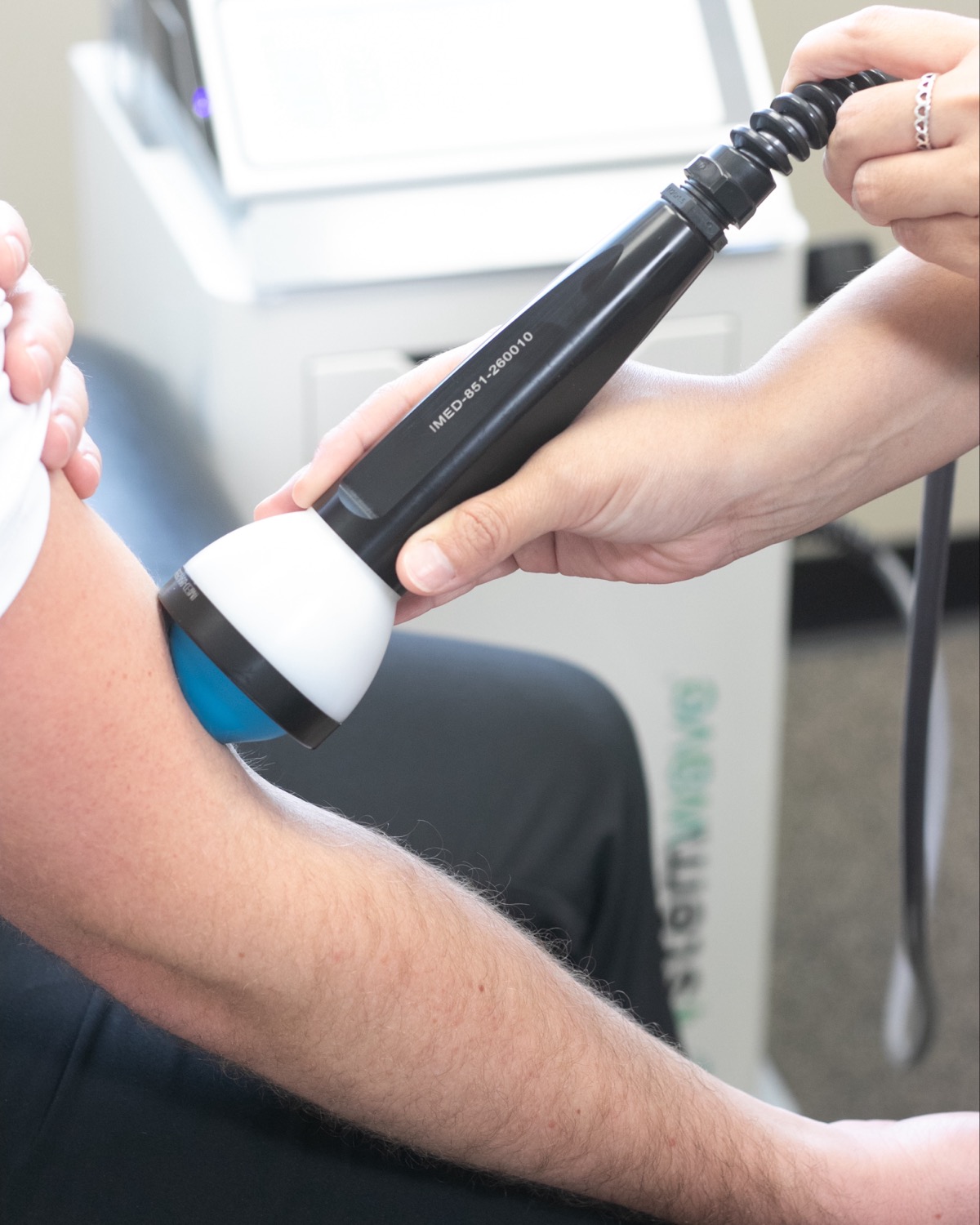
StemWave acoustic wave applicator being used on a patient's elbow at Peak Performance
01Who this is for

The pain that outlasted everything you threw at it.

Where we use StemWave:

Foot & ankle
plantar fasciitis · Achilles tendinopathy
Knee
patellar tendinopathy ("jumper's knee") · chronic knee pain
Hip
greater trochanteric pain — the "hip bursitis" that won't quit
Elbow
tennis elbow · golfer's elbow
Shoulder
rotator cuff tendinopathy · calcific tendinopathy
Hand & wrist
overuse tendinopathies

It's probably NOT the right tool if:

  • The pain started this week — fresh strains usually calm down with simpler care and smart unloading. (That's a standard visit, and good news.)
  • The exam suggests a full tear or something structural — that's imaging and possibly a surgeon, and we'll say so.
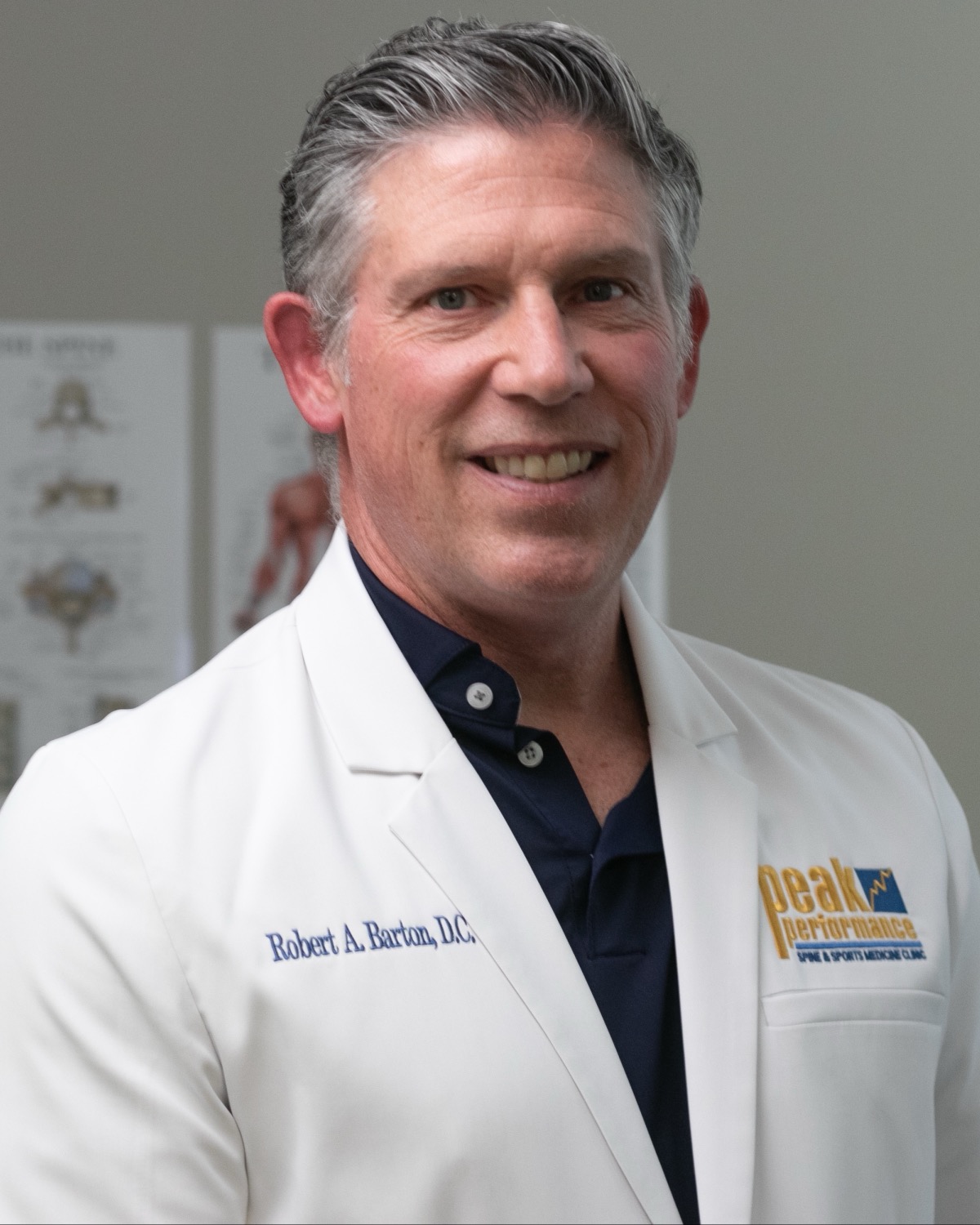
Dr. Robert Barton, DC
Dr. Barton — runner until 2013. He'll tell you the whole story himself.
02The doctor's own tendon

Dr. Barton has been on the losing side of this fight. Twice.

In 2013, Dr. Barton was a runner with Achilles tendinopathy — the classic kind. Like most active people, he assumed he could train around it. He was three years in before he sat down with a sports-medicine journal issue devoted entirely to tendinopathy, and the first lesson stung: you have to stop the offending activity. Not modify it. Not push through it in better shoes. Stop it, or nothing else you do matters.

The second lesson explained the first: tendinopathy has stages — and after three years, he wasn't in an early one.

He bought a device to treat his left Achilles — sold as shockwave therapy. The treatments hurt enough that he had to psych himself up before every session, and it took six months. But the tendon finally healed. He felt good enough to run again.

He ran exactly once. The other Achilles flared.

This time he did what the journal said, immediately: stopped running, stage one, by the book. It still took a night boot, worn for two years, before the right side fully resolved. He never went back to running — walking is his exercise now.

The honest cost of tendinopathy, told by a doctor who paid it: caught late, it takes over your calendar. Caught early, it still doesn't hurry.

And there's a twist he only learned recently: the painful device he'd bought all those years ago wasn't actually shockwave therapy at all — it was a radial pressure-wave device, a different technology that's commonly sold under the same name. More on that below, because if a spine doctor can get fooled by the label, so can you.

03The three stages

Three stages. One honest question: which one are you in?

Stage one

Irritated

The tendon is reacting to a load spike. This is the stage everyone thinks they're in.

Stop the offending activity →it will likely settle on its own.
Stage two

Struggling

The tendon has started remodeling badly. The window is closing.

Stop the offending activity →it may — or may not — recover.
Stage three

Stuck

The tissue has effectively given up trying to heal.

Stop the offending activity →it will likely NOT resolve on its own. It needs the repair process restarted.
The uncomfortable math: most people don't stop the offending activity at stage one — because at stage one, it doesn't hurt enough to. By the time the pain is bad enough to change your life, you're usually deeper in. That's not a character flaw; it's how tendons work. They complain late.

Staging language adapted from the tendinopathy continuum described in the sports-medicine literature (Cook & Purdam, Br J Sports Med). Your exam determines the stage — not a guess.

04Why tendons get stuck

A stuck tendon isn't inflamed. It's exhausted.

Same two-factor model that runs this whole clinic: too much load, tissue sensitized under it. Tendons handle enormous loads — until the load outruns the tendon's ability to repair between efforts. Push that long enough and the tissue changes: disorganized fibers, poor blood supply, a repair process that has stalled out. That's why rest alone stops working at stage three — rest removes the insult, but it doesn't restart the healing.

What acoustic waves do about it: StemWave delivers focused acoustic waves into the exact spot that's stuck — a precise, dosed mechanical stimulus. Researchers call the effect mechanotransduction: cells respond to the mechanical signal with increased local blood flow and renewed repair activity — the biological response the tissue stopped producing on its own. It's designed to be the wake-up call, not the whole recovery: the tendon still rebuilds the way tendons always rebuild — progressively, under managed load.

The house model, both directions: Decompression unloads tissue that's getting crushed. StemWave re-stimulates tissue that's stopped responding. Different problems, same model — manage the load, restore the margin.
05Know your device

Not all "shockwave" is shockwave.

Two very different technologies are sold under the same name. The label fooled a spine doctor — here's what he learned.

Commonly sold as "shockwave"

Radial pressure wave

How it works
A piston physically strikes the surface; the pressure spreads outward from the skin.
Where the energy peaks
At the surface — fading with depth.
In the research
Classified as pressure waves, not true shockwaves.
Dr. Barton's experience
The device he bought in the 2010s. Effective eventually — and painful enough to require a pep talk before every session.
What we use — StemWave

Focused shockwave

How it works
Generates a true acoustic shockwave — no piston hammering the surface.
Where the energy peaks
At depth, focused on the injured tissue itself.
In the research
Peak pressures orders of magnitude higher at the focal point — delivered where the problem is, not where the skin is.
What patients report
A fast tapping, tender over the spot, very tolerable — no anesthesia, no downtime.

We're careful here: radial devices have their own research and their place. But they are not the same tool — and most people comparing "shockwave near me" have no idea two different technologies wear the same name. Now you do.

06The honest evidence

We read the trials so you don't have to.

Shockwave therapy — the research category StemWave belongs to — has been studied in clinical trials for over two decades, across the kinds of conditions on this page. The honest summary:

Strongest evidence

Chronic plantar fasciitis · calcific shoulder tendinopathy · greater trochanteric (hip) pain — where one-year trial results have generally favored shockwave, including head-to-head trials where it outperformed corticosteroid injection.

Good-to-moderate evidence

Achilles tendinopathy · tennis elbow · patellar tendinopathy — multiple systematic reviews report meaningful improvements in pain and function, especially in chronic cases combined with a loading program.

What doesn't work — and why we tell you

Shockwave applied while you keep doing the offending activity performs poorly in trials. One well-known study treated jumping athletes mid-season and found no benefit. The lesson Dr. Barton learned the hard way is in the data: load management first, stimulation second.

We won't quote you a success rate — this website never does. What we'll do is examine you, stage the tendon honestly, and tell you whether your problem is the kind this tool helps.
07What a course is like

Ten minutes. No needles. No downtime.

1st

It starts with a test treatment.

At your evaluation, if the exam says you're a candidate, we treat the spot — that day. Don't be surprised if that single test treatment brings relief. It fades, and that's expected — one dose doesn't rebuild a tendon. The point is proof: we've confirmed the target, and you've felt what the treatment does, before you commit to anything. Same philosophy as our $49 decompression visit: experience first, decide second.

The session

A handheld applicator delivers focused acoustic waves to the exact painful spot — we find it by feel and by your feedback. "That's the spot" is a diagnostic instrument here. About 5–10 minutes.

What it feels like

A rapid tapping, tender over the injured spot, and very tolerable — no piston, no anesthesia, no downtime. The spot getting less tender week to week is often the first progress marker.

The course: 5 to 10 visits

Sized to the case at your evaluation. The expectation, stated honestly: the tissue gradually desensitizes as it heals — that's what we track visit to visit. We are not looking for 100% resolution by the last visit, because the tissue usually continues to heal and desensitize in the months that follow. The last visit isn't the finish line; it's where the tendon takes over.

Boosters, not memberships

Some patients return for one or two booster treatments as needed down the road — the same dental-checkup ethos as the rest of this clinic. No open-ended plans.

Alongside it: the part most clinics skip

A load-management plan for the offending activity — because stimulation without unloading is how trials fail. We'll build it with you, including what you CAN keep doing.

08The next step

Find out which stage you're in.

The evaluation is simple and honest: history, hands-on exam, staging, and a straight answer — StemWave fits your case, or it doesn't — and here's what we'd recommend instead. If the exam points to something acoustic waves can't fix, you'll hear that first.

09Fair questions

Before you call.

Is this the same as shockwave therapy?

StemWave is a focused acoustic wave device — the "extracorporeal shockwave therapy" you'll see in the research. But beware the label elsewhere: many devices sold as "shockwave" are actually radial pressure-wave tools, a different technology (see the comparison above). If you've had a bad or painful "shockwave" experience before, it's worth knowing which one you actually had.

Does it hurt?

It's tender over the injured spot — a fast tapping — and very tolerable, with no anesthesia. Dr. Barton's old radial device required a pep talk before every session; this doesn't. The spot often becomes less tender as sessions progress — itself a progress marker.

How many sessions will I need?

Typically 5 to 10, sized to your case at the evaluation — which usually includes a test treatment so you can feel what it’s like before you commit. You'll know the plan and the price before you start.

Can I keep running / lifting / playing during treatment?

This is the honest part: usually not at full volume. The research is clear that continuing the offending activity undermines the treatment. We'll build the load-management plan with you — including what you CAN keep doing.

Is it covered by insurance?

Shockwave itself generally isn't. But your recovery usually involves more than the shockwave — exam, therapy, supporting care — and we build the plan to use whatever coverage you have toward it. Every situation is different; Amanda runs your actual numbers before you decide anything. As a general rule: we are always trying to help you use your insurance for your condition.

What if it's actually a tear?

That's what the exam is for. If your history and exam suggest a tear or another structural problem, we say so and point you to imaging or the right specialist — before you spend anything on treatment.

Why do you treat "bursitis" with this?

Much of what gets called hip bursitis is actually tendinopathy of the tendons over the hip — which is why cortisone often fades and why the research on shockwave for this condition is encouraging.

Find out if you're negotiating with a stage-three tendon.

You've rested it, braced it, iced it, maybe injected it. If it were going to resolve on its own, it likely would have by now. One evaluation tells you which stage you're in and whether StemWave fits.

Call nowEvaluation